The Captain of Nevermore
I’m not a good person. I tried very hard to be one, but unfortunately I lived in a very turbulent time, a time of change, progress and most of all - death. I was a firm believer in humanism, in improving and saving the world. I believed the books of my childhood which told me stories of great engineering feats, of conquering the wilds, sailing the sky and reshaping seas. I was an idealist and lived for a goal, a dream - the improvement of life for all humanity. It was a dream which had shattered as those in power had betrayed us.
Our leaders did not follow the propaganda they had instilled in the hearts and minds of children and USSR citizens like myself. They spoke of bringing peace to the world while they ordered the construction of fifty thousand nuclear warheads. How many people could those warheads have fed? How many beautiful roads, hospitals and schools could that money have built?
But, I cannot blame the Soviet government for everything. Perhaps the dream we were following was flawed to begin with. The very tenets of Bolshevism called for the deaths of anyone who opposed it and the millions of lives that it took to lay the foundation of USSR during the six-year-long Civil War had haunted our supernation until its very end.
I myself am to blame. Without realizing it, one doctorate after another, one success in the field of biochemistry and virology after the other and I became the administrator of Aralsk-7, a top secret Soviet facility that worked to wield death itself.
Without intending to do so, I became a tiny gear in the machinery of war that I had once dreamt of preventing. By the orders of those above me, I ended up working on Vozrozhdeniya island war base, managing the design of new biological weapons. Many scientists like myself, the brightest stars raised by USSR, had been caught in the trap of the living manifestation that was our Union. We were all trapped in a beautiful lie, a paradox, where we bred death while propaganda posters around us declared “Workers of the world unite to bring peace to all mankind”. At the end, none of us could honestly tell each other why we did what we did.
I looked out of the window of my lab towards the dying Aral sea. Rusted, derelict ships stuck out from the desert that was once the sea floor.
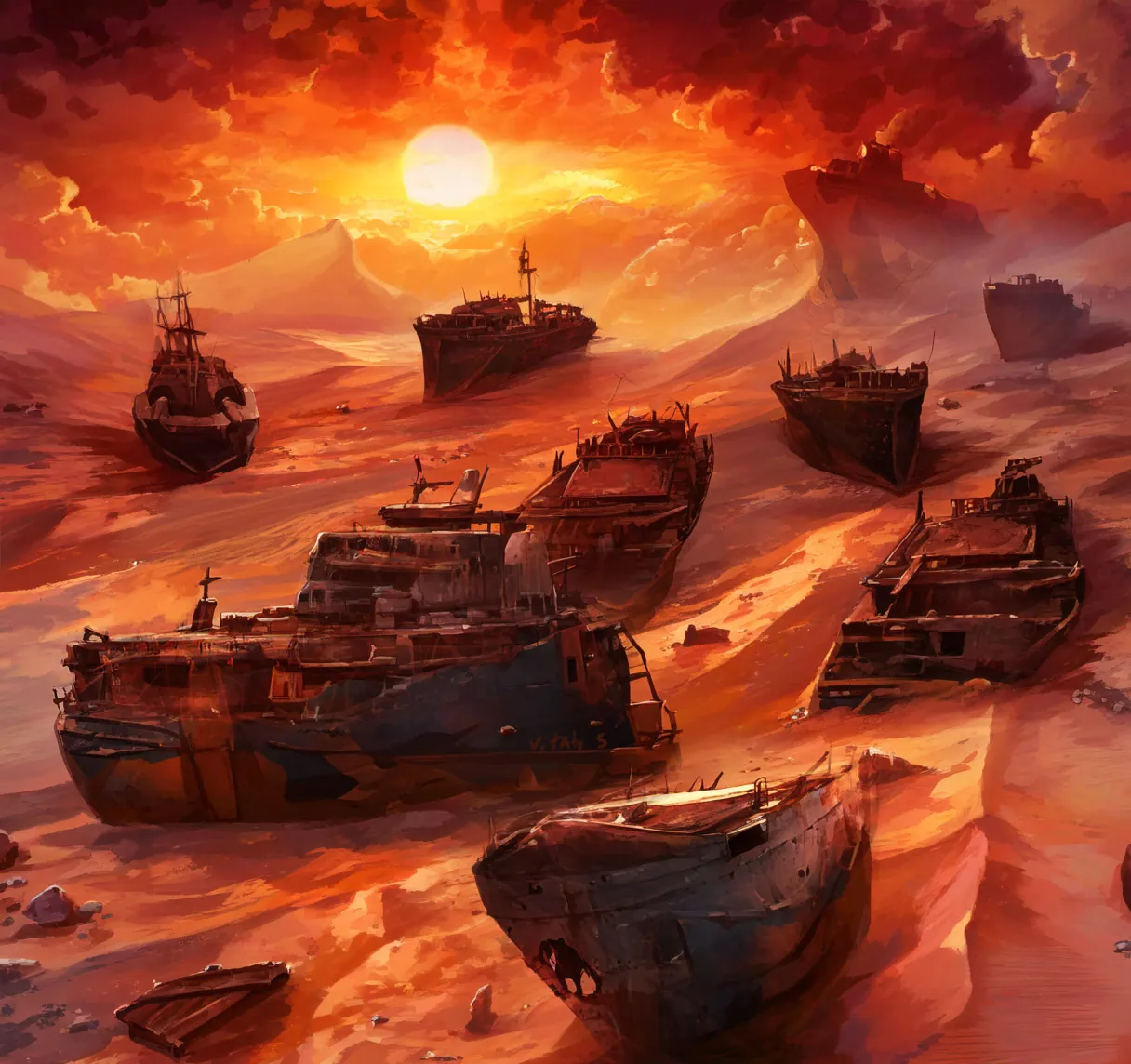
In 1960 we had diverted the local rivers to irrigate the fields of Kazakhstan, and everything around Vozrozhdeniya island slowly dried up and became a dead zone of salt and desert, causing massive sand storms around the area. The newspapers of the 90’s called it “one of the planet’s worst environmental disasters”. They weren’t wrong.
I found it ironic how the lab that produced death was located on an island in a sea we had foolishly killed. Even more so, the Russian name for the island - “Vozrozhdeniya” meant “Rebirth” and it was anything but!
“I’m broadcasting this last message from the central radio tower of Aralsk-7 to anyone willing to listen because I have nothing left and nothing to be afraid of.
“Perhaps some will hail me as a hero. Know this, people like me deserve no accolades - I am only correcting my terrible mistakes, narrating my final chapter.
“In harnessing the power of the atom the Soviets had caused the Chernobyl catastrophe - the worst nuclear disaster in the world. The explosion of the 4th reactor of Chernobyl made a 2600 km² exclusion zone in Ukraine and spread a cloud of radiation as far as Scotland. That was in 1986.
“It is now 1992 and something just as horrific is likely to happen, unless I stand my ground. Unless I do what has to be done to destroy my legacy.”
I lowered the microphone and looked at the fading, cracked mosaic of Yuri Gagarin, the first man we had put in space. Yuri stared down at me from the wall of the Viral Research Laboratory, his hand raised to the sky as if he was trying to capture the heavens themselves. The symbol of USSR, the renowned hammer and sickle, was embedded into the cracked, pentagonal mosaic with gold-plated tiles. It shone above Yuri as if it was the core of a nuclear reactor that was attempting to irradiate the entire world with divine blessings of the glorious tenets of communism.
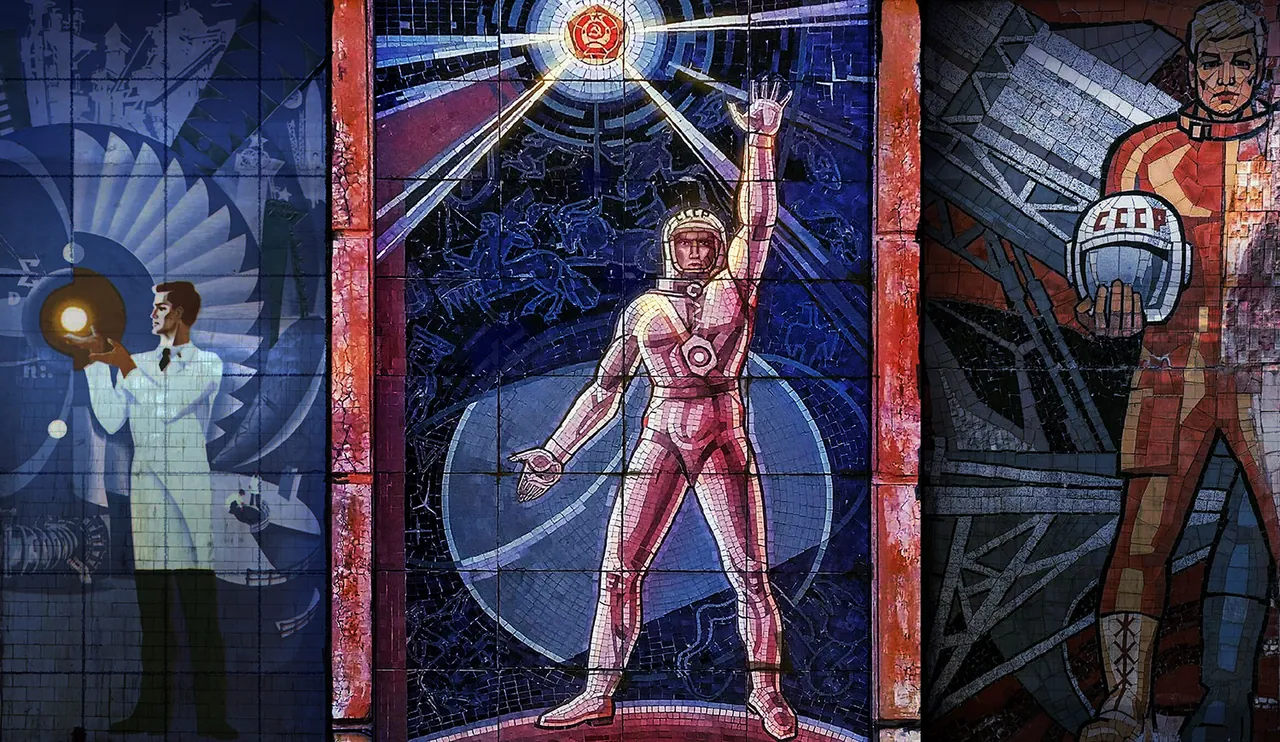
“I’m sorry, Yuri. We have failed you,” I spoke, my voice cracking. My finger shook on the trigger of the flare gun pointing at numerous burlap sacks beneath my feet.
The Bioweapons laboratory was now empty of people. Its halls which were once filled with doctors, assistants and various personnel were now barren. The Soviet Union had fallen and its greatest achievements and accolades meant nothing now. Various shiny medals I had received from numerous General Secretaries of the time meant nothing. My bank account was practically nullified as the Soviet Ruble plummeted. Just last week I saw soldiers carrying millions of Rubles to be buried in a mine shaft nearby and that’s when I knew that it was all over. Millions! Now worth less than the paper they were printed on.
One of the soldiers gave me a bag full of money from the truck as a “parting souvenir”. The plastic bag with one hundred thousand rubles now sat in the corner, taunting me. I looked at it and remembered how my mother struggled to save fifty rubles in a glass jar in 1950 to buy us something nice. It was heartbreaking.
I had acquired the fertilizer that now sat beneath my feet from a farm supply depot located on the mainland. It only took a small bribe of several bottles of vodka to the guards and a promise to share the profits from the under-the-table sale. The local administrator had let me relocate their entire stock. I wasn’t the first - the desperate and corrupt were already taking apart the Soviet legacy. Simply enough - nobody wanted to deal with 2000 tons of this stuff.
I had no plans to sell the fertilizer. I tricked the depot administrator to make my last stand. It took a lot of effort on my part to get the bags here - thankfully the army had abandoned tonnes of fuel and equipment when they left.
“Doctor Kerenski! Give us the keys!” A bald man in a black coat growled at me from behind the barricade of fertilizer bags. I shook my head, refusing to budge. He knew my name because he was a local gangster and marauder aiming to make profit from my dangerous work. The marauder gave a sign to his men. They rushed into the building, breaking down the doors, trying to shove aside numerous fertilizer bags.
Behind me, beneath the mosaic of the first cosmonaut, were shelves upon shelves of research papers and fridges containing the first living machines the universe itself had crafted over millennia - viruses and bacteria. Labels made in my handwriting announced their names, feared by many: anthrax, smallpox, black plague, brucellosis, tularemia, coronavirus and many, many other RNA viruses and bacteria that we had studied, modified and improved ourselves. Computer databases hummed off to the side, containing bacteriological and virulent research data gathered nearly over half a century by the team that was working under me.
Traditionally, the captain went down with the ship. I was the metaphorical captain of Aralsk-7, the last guardian of its no longer beating heart - the Bioweapons lab. Throughout the last week 1500 people who lived on Vozrozhdeniya island and worked in Aralsk-7 were rapidly evacuated by the army. Civil and military infrastructure became abandoned and the secret Soviet installation became a ghost town.
I refused to leave, refused to abandon my post. The soldiers didn’t care enough to drag me out of the lab - they knew that the currency they were getting paid in was now obsolete. They knew that the people in charge had given up on this place. There was no proper procedure, no clear order to decommission the facility, everything was simply to be abandoned, left behind. Kazakhstan had broken away from USSR on December 16, 1991. Whatever had remained belonged to them now. The facility along with all of its containers of death was theirs, according to the barely stable, newly minted, democratic Russian government.
Two hundred tons of anthrax plus other far more abominable things held within the base were declared Kazakhstan’s problem! Kazakhstan had no way of dealing with the microscopic nightmares held within this place. Its breakaway from USSR and collapse of demand for heavy industry products resulted in a terrible shock for their economy. Anarchy and chaos escalated with every passing day with no end in sight.
Kazakhstan would do nothing about protecting or destroying this place, I knew. The carelessness of the post-Soviet government was insane, but such was the norm these days. The empire that we had toiled so hard to build had fallen and all of the people who once worked here creating death had left this place forever, abandoning everything.
Dangerous-looking men in black balaclavas had arrived on a hovercraft just a week after the soldiers had departed. Damned scavengers! I knew that they were looking to raid the labs.
The blueprints of death behind me could be worth a lot in the right hands - if the gangsters were connected enough they could sell them to the Chinese or Americans to be unleashed in some distant future. Alternatively, if the marauders were stupid and careless, they could get infected and spread death and misery across the entire planet.
I would not let my work be released upon humanity! Aralsk-7 would not become another Chernobyl. As they rushed towards me, I let go of the trigger and the flare gun fired into the ground igniting the fuel oil that I had poured all over the fertilizer bags. An open oxygen tank hissed at my feet. It took only a few seconds for the fire to reach 300 degrees Celsius.
I smiled as the gangster’s face twisted in panic as waves of fire blossomed all around me. I laughed as my clothes burned.
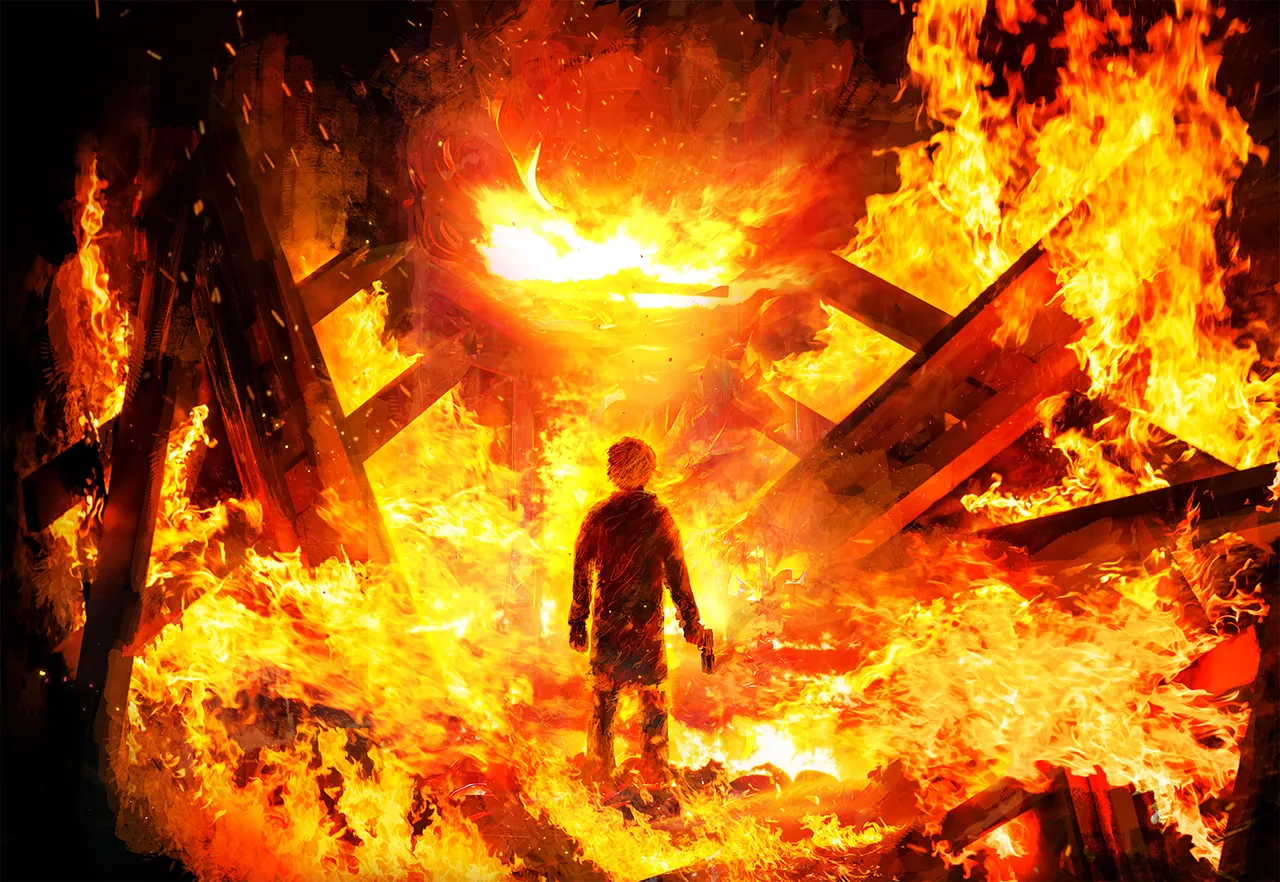
Neither he nor anyone else would be able to wield my legacy of death. I knew that under the right conditions ammonium nitrate within the fertilizer changed from a solid to a gas almost instantaneously. When such a reaction occurred, the detonation wave traveled at supersonic speeds obliterating everything in its path.
Hundreds of tonnes of ammonium nitrate all around the lab and beneath me flashed with the catalytic reaction as I took my last breath on this weary earth.
I did not see the mushroom cloud that was now Aralsk-7, but I knew that it would be beautiful.
TLDR notes about the art:
I’ve done lots of art for this series! Here is all of the art from book 1 [spoilers]
Some of them are painted in Photoshop from scratch with a wacom tablet.
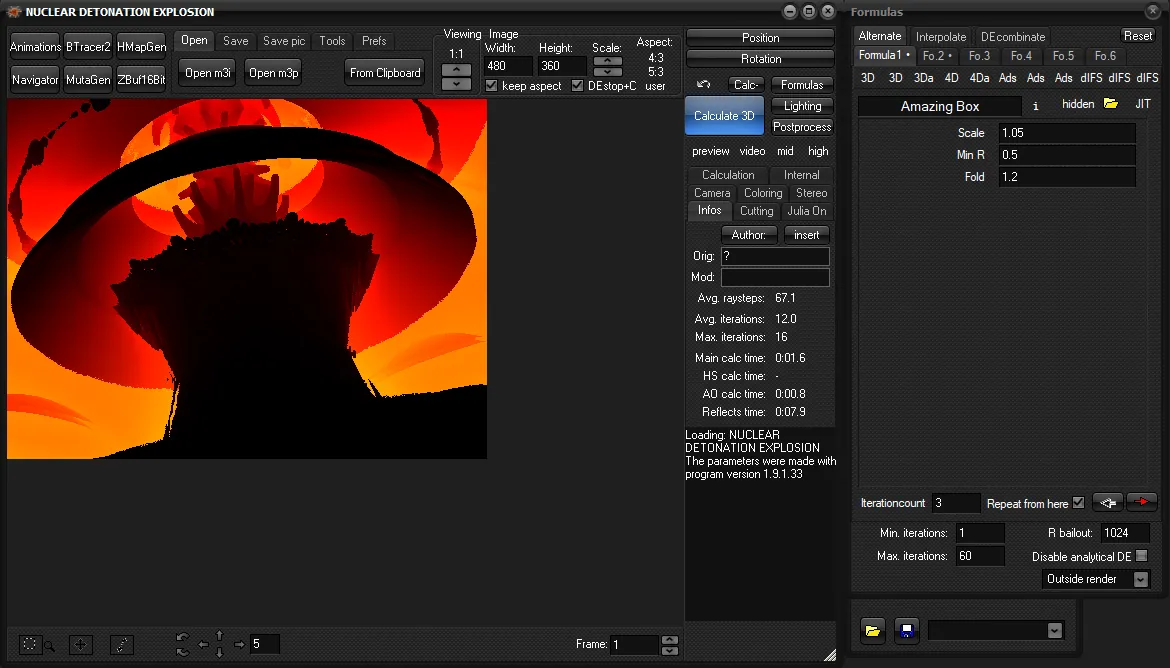
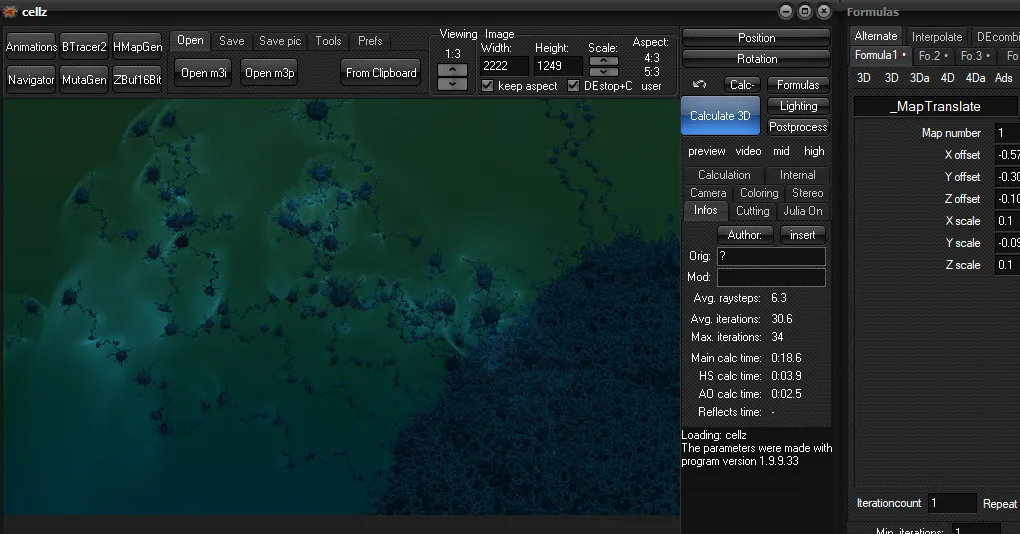
Some are created with software called Mandelbulb which generates 3+ Dimensional megastructures using fractal mathematics.
Here is an example of a nuclear explosion made with fractal mathematics:
Here is an example of self-replicating ‘viral structure’:
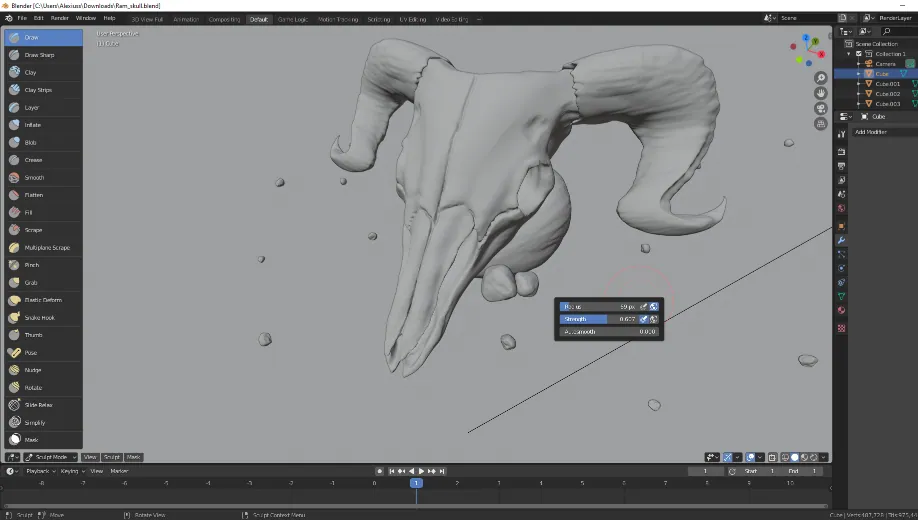
Some of the art in this book is made with 3d models using Blender, Unreal Engine and matte painting in Photoshop:
Some of the art in this book is made by sketching out of the base in Photoshop and then applying a custom diffusion model to it in hundreds of layers.
This diffusion model is a VERY specialized, smaller, personal tool, made entirely from my work. It utilizes a diffusion process like this [a custom image generative network that’s trained from scratch using my own data]. This model utilizes madelbulb renders + 10 terabytes of photography I shot over past 20 years in my urbex trips across Canada, USA, Europe and Siberia + 800 gigabytes of 3d models designed or 3d scanned myself + thousands of my illustrations made from 1997-2024. It is the only one of its kind since it’s 100% made by me. It can be used to add unique detail to any concept, especially ones that I grow from fractals in mandelbulb.
Example of process:
Concept sketch:
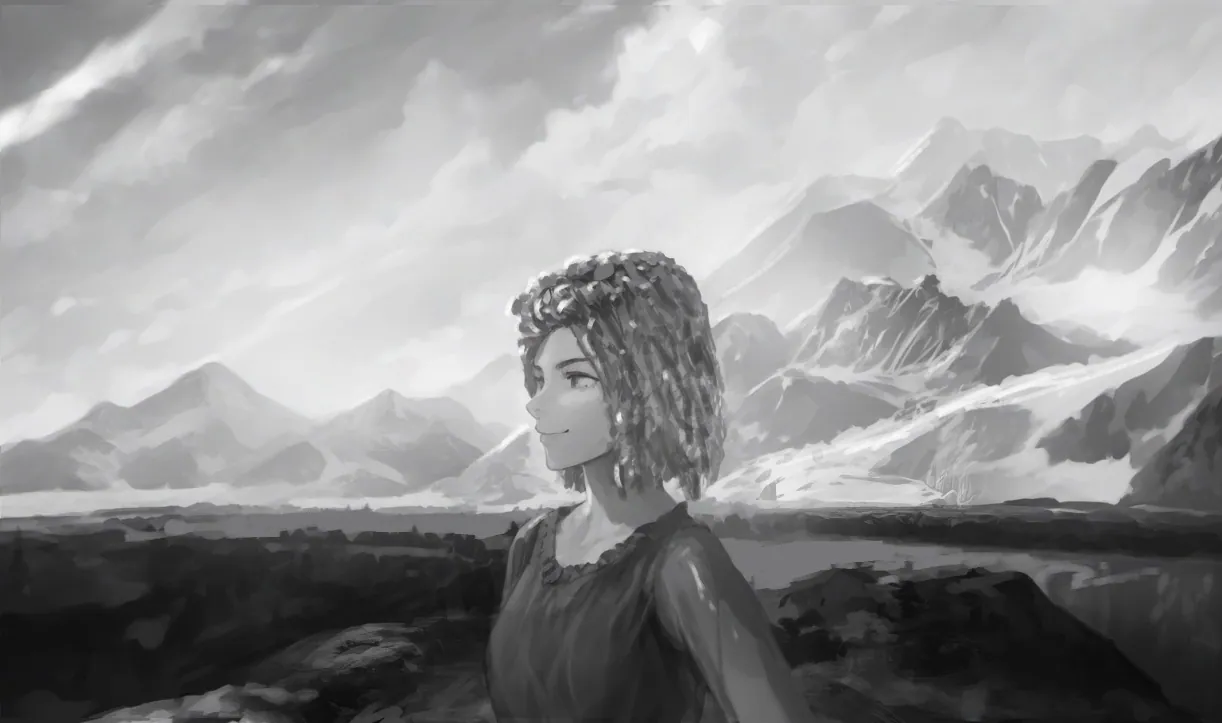
3d model made in Blender & Unreal Engine:
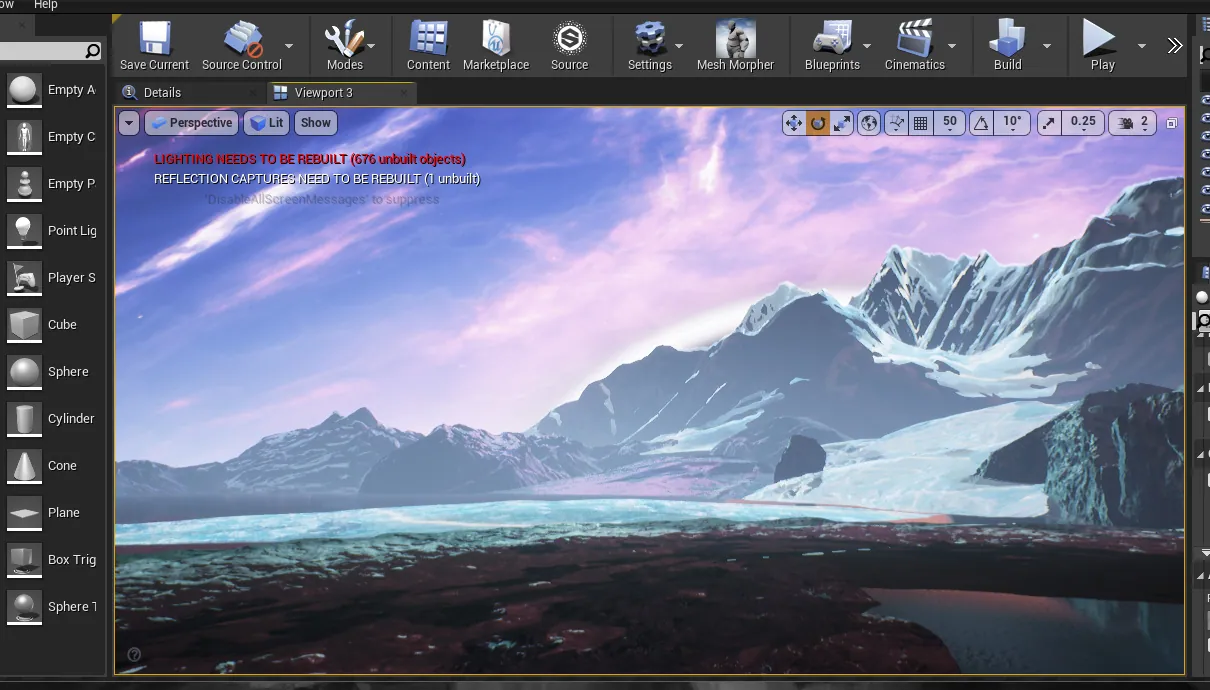
Finished art: